
Flowers used in Hindu pooja: A Complete Guide to Sacred Offerings
Daily pooja in Indian homes is more than a ritual — it is a quiet moment of connection, gratitude, and spiritual balance. One of the most beautiful parts of this tradition is offering flowers to the divine.
Fresh flowers are not chosen only for decoration. In Hindu culture, they represent devotion, purity, and the intention behind prayer. Even a small flower offered with sincerity is believed to carry powerful spiritual energy.
Whether you perform a simple morning prayer or an evening aarti, choosing the right flowers can make your pooja feel more peaceful and meaningful.
Choosing the best flowers for daily pooja helps create a peaceful spiritual atmosphere at home. In Hindu traditions, flowers are not just offerings — they symbolize devotion, purity, and divine connection.
Why Flowers Matter in Daily Pooja
Flowers have been part of Hindu worship for thousands of years. Scriptures and temple traditions describe flowers as symbols of the human heart — soft, pure, and offered with humility.
When devotees offer flowers:
- The fragrance purifies the surroundings
- The mind becomes calm and focused
- The offering symbolizes surrender and devotion
Unlike artificial decorations, fresh flowers represent life, growth, and impermanence, reminding us to live with gratitude.
Spiritually, each color and fragrance carries meaning:
- White → purity and peace
- Yellow → prosperity and positivity
- Red → strength and devotion
- Pink → compassion and love
Because of this symbolism, flowers act as a bridge between the devotee and divine energy.
Choosing Flowers for Daily Pooja
For everyday worship at home, flowers should be:
- Easily available
- Fresh and natural
- Long-lasting
- Suitable for multiple deities
Simple flowers used daily are considered more powerful than rare flowers offered occasionally, because consistency in devotion matters more than grandeur.
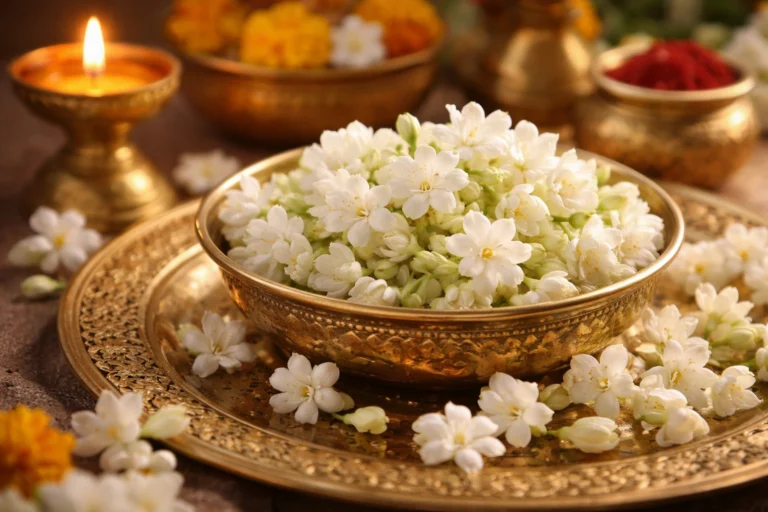
Jasmine is widely considered the ideal flower for daily worship.
Spiritual Meaning
Its pure white petals symbolize spiritual awakening and inner peace. The gentle fragrance naturally creates a calm atmosphere during prayer.
Jasmine is especially loved by:
- Lord Shiva
- Lord Hanuman
- Lord Vishnu
Why Jasmine Is Perfect for Daily Use
- Available throughout the year in India
- Remains fresh for hours
- Affordable and easy to use
- Suitable for almost all deities
In many homes, a small jasmine garland placed near the diya instantly transforms the prayer space into a peaceful sanctuary.
Flowers and Their Connection to Different Gods
Different deities are traditionally associated with specific flowers based on mythology and symbolism.
Lord Shiva
Best Flowers:
- White Jasmine
- Datura flower
- Blue Aparajita
Meaning: Simplicity and detachment. Shiva prefers humble offerings over luxurious ones.
⚠️ Ketaki flower is traditionally avoided due to a mythological story mentioned in the Shiva Purana.
Goddess Lakshmi
Best Flowers:
- Lotus (Kamal)
- Red or Pink Roses
- Marigold
Meaning: Prosperity, purity, and abundance. The lotus represents rising above worldly struggles.
Lord Ganesha
Best Flowers:
- Marigold (Genda)
- Red Hibiscus
- Durva grass (very sacred)
Meaning: Energy, success, and removal of obstacles.
Lord Vishnu & Krishna
Best Flowers:
- Tulsi leaves (most sacred)
- Jasmine
- Lotus
Tulsi is considered inseparable from Vishnu worship and symbolizes devotion.
Goddess Durga & Kali
Best Flowers: Red Hibiscus, Red Roses
Red flowers represent strength, courage, and divine feminine energy. In Hindu worship, offering red flowers like hibiscus and red roses to Goddess Durga and Goddess Kali symbolizes deep devotion and surrender. The vibrant red color represents shakti — the powerful divine feminine energy that destroys negativity and protects righteousness. Hibiscus, especially, is considered very प्रिय to Kali Maa because its bold red petals reflect her fierce and transformative nature. When devotees offer these flowers, they are not just presenting beauty — they are invoking strength, courage, protection, and inner power in their own lives.
Other Excellent Flowers for Daily Rituals
Marigold (Genda)
Bright yellow and orange marigolds symbolize positivity and protection.
Why people love it:
- Stays fresh all day
- Budget friendly
- Ideal for garlands and aarti thalis
Rose (Gulab)
Roses express love and devotion. Their fragrance enhances evening pooja rituals.
Best used for:
- Lakshmi worship (Fridays)
- Devi prayers
Lotus (Kamal)
The lotus is among the most sacred flowers in Hinduism.
It symbolizes:
- Enlightenment
- Spiritual purity
- Divine beauty
Even a single lotus bud is considered highly auspicious.
Flowers to Avoid in Daily Pooja
Traditionally avoided flowers include:
- Thorny flowers
- Artificial flowers
- Wilted or fallen flowers
- Toxic flowers like oleander (unless used under guidance)
Freshness is considered more important than variety.
Enhancing Daily Pooja with Flowers
Flowers become more meaningful when offered mindfully. Simple practices:
When you offer a flower, pause for a moment and take a slow breath. Let your mind settle before placing it at the altar. Choose fresh flowers with gratitude, not just as a routine, but as a conscious act of devotion. As you offer them, silently express a prayer, a thank you, or an intention from your heart.
In that small moment of awareness, the flower becomes more than a ritual item — it becomes a bridge between you and the Divine.
- Place five petals near the deity’s feet
- Offer flowers while chanting mantras
- Decorate around the diya for calm energy
Involving family members — especially children — helps preserve tradition and builds emotional connection with spirituality.
Spiritual Truth Behind Offering Flowers
According to Hindu philosophy, offering flowers represents offering our inner qualities:
- Ego → surrendered like petals
- Thoughts → purified like fragrance
- Intentions → made sacred through devotion
This is why even the smallest offering becomes powerful when done with sincerity.
Conclusion: Bringing Nature into Daily Worship
Flowers remind us that devotion does not need complexity. A small prayer, a lit diya, and a fresh flower are enough to create sacred energy at home.
Daily pooja becomes peaceful when rituals remain simple and heartfelt.
Start with one flower, one moment of gratitude, and one intention — and slowly your home begins to feel calmer, lighter, and spiritually connected.