
Have you ever wondered why we light a lamp or offer a flower during prayer? For many of us, these acts are second nature—rituals passed down through generations. But beneath the surface of these simple gestures lies a profound spiritual technology designed to transform our inner world.
In ancient Hindu and Buddhist traditions, this practice is known as Panchopachara Puja. The name itself is beautiful in its simplicity: “Pancha” means five, and “Upachara” means service or offering. It is more than just a ceremony; it is a bridge between the seeker and the divine, using five symbolic elements to engage our senses and elevate our consciousness.
Let’s explore the hidden meanings behind these five sacred offerings and how they can bring mindfulness to your daily life.
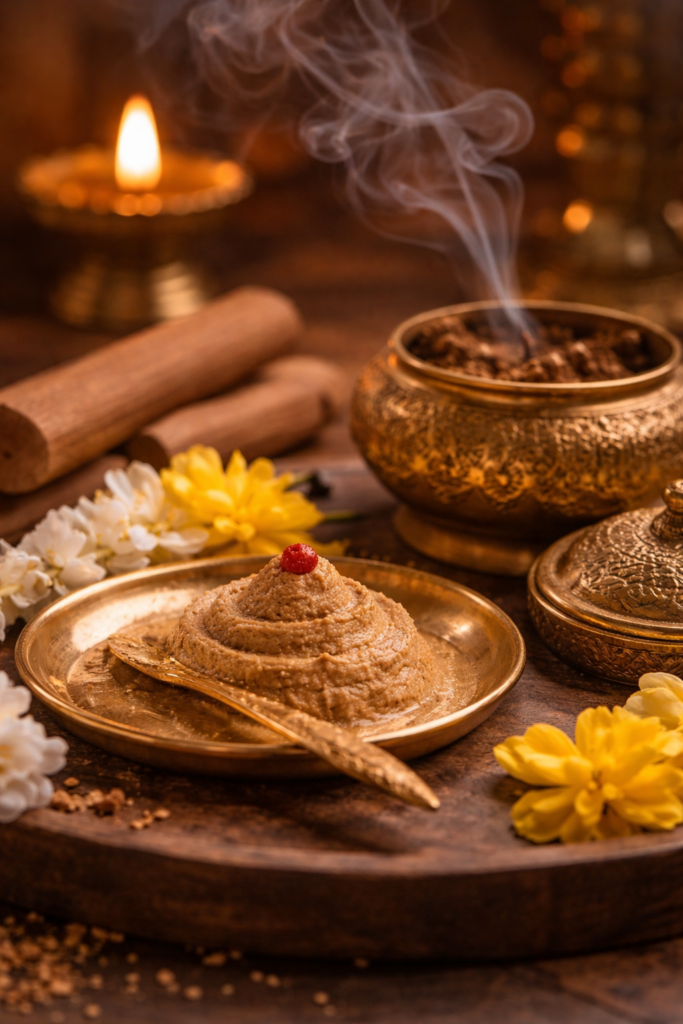
1. Gandha (Fragrance): Purifying the Mind
The journey begins with Gandha, usually the offering of sandalwood paste or aromatic substances.
- The Symbolism: It represents the purification of our thoughts.
The Connection: Just as the fragrance of sandalwood calms the room, Gandha is an invitation to settle your mind and set a sincere intention before connecting with the divine.
2. Pushpa (Flowers): The Blossoming Heart
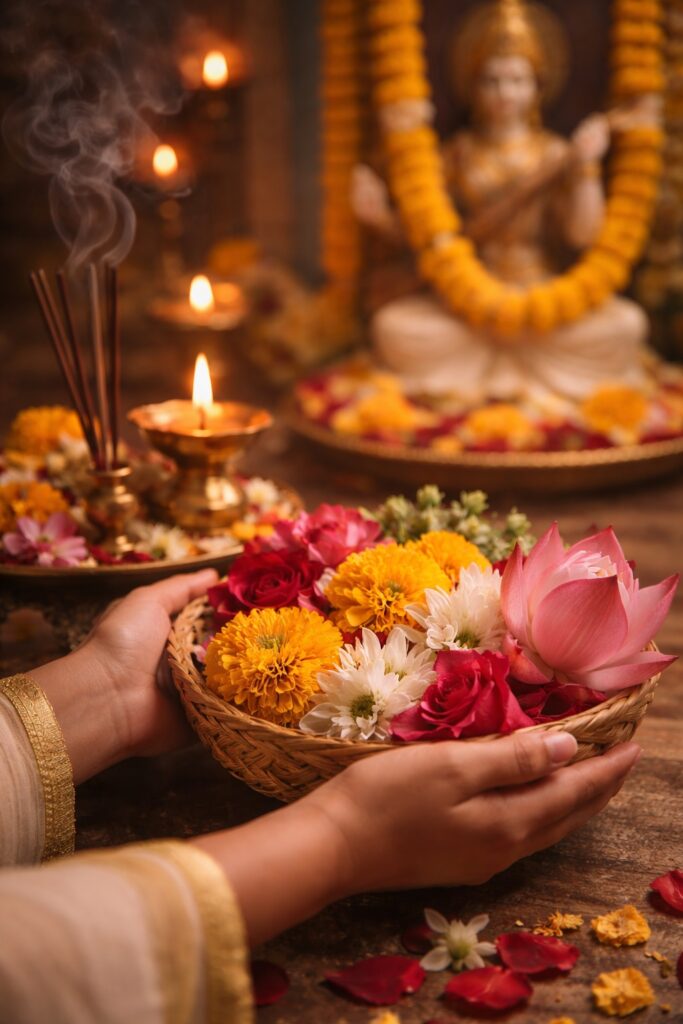
Offering fresh flowers (Pushpa) is perhaps the most beloved part of any puja.
- The Symbolism: Flowers embody natural beauty and purity.
- The Connection: Their delicate nature reminds us of life’s impermanence (Transience of Life). When you offer a flower, it symbolizes your own heart opening and your virtues blossoming in the presence of grace.
3. Dhoopa (Incense): Letting Go of Ego
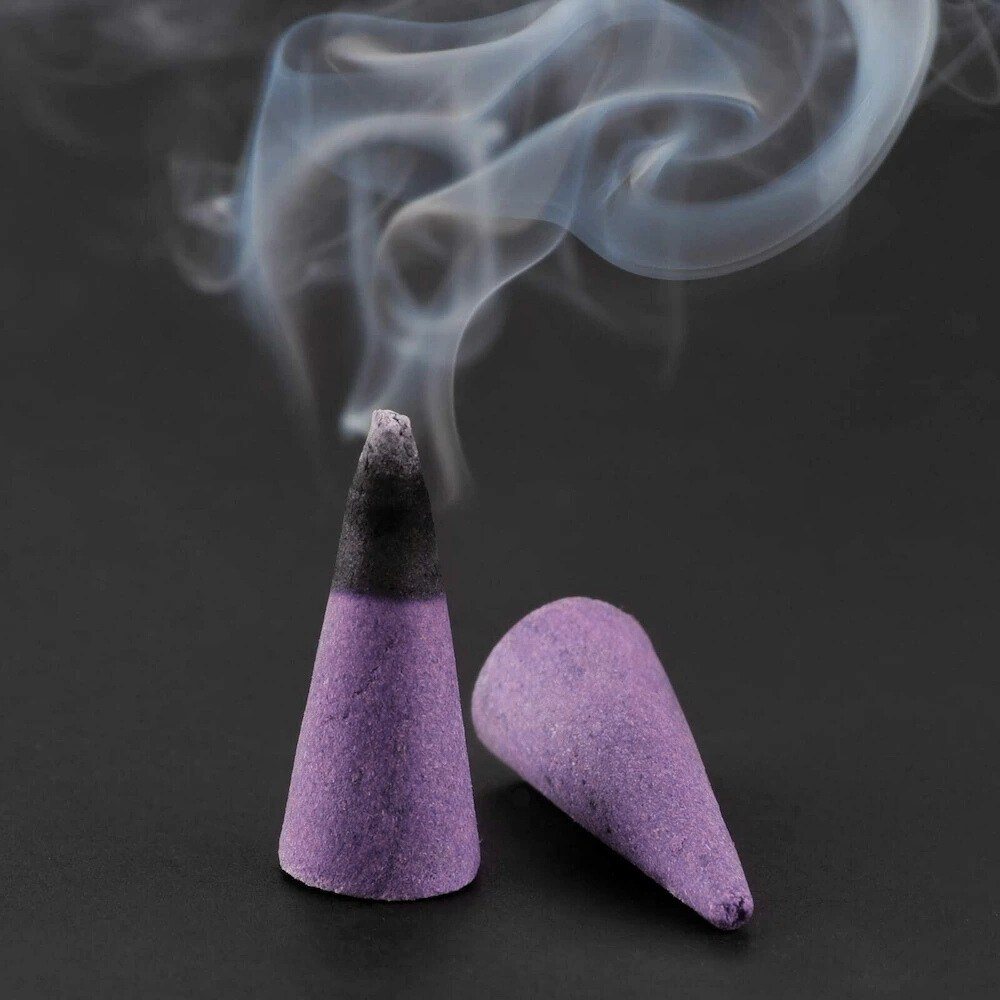
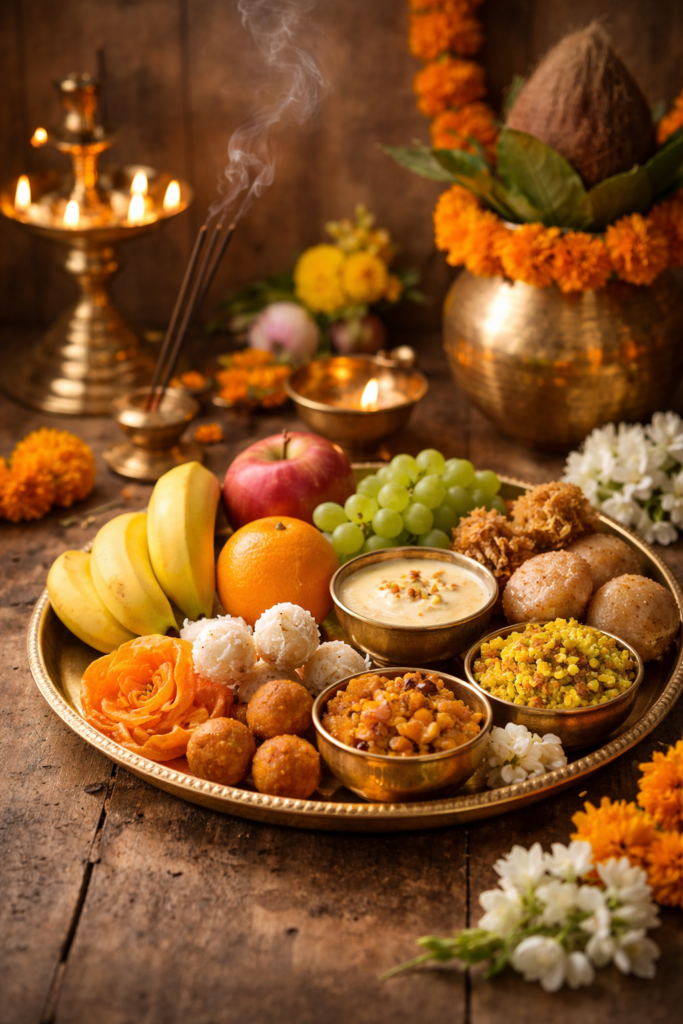
As the fragrant smoke of incense rises, it carries a deep metaphysical message.
- The Symbolism: The upward-moving smoke represents our prayers and aspirations ascending to the heavens.
- The Connection: Dhoopa is about surrender. It represents letting go of the ego and worldly distractions, allowing your spirit to rise above the “smoke” of everyday stress.
4. Deepa (Light): The Illumination of Wisdom
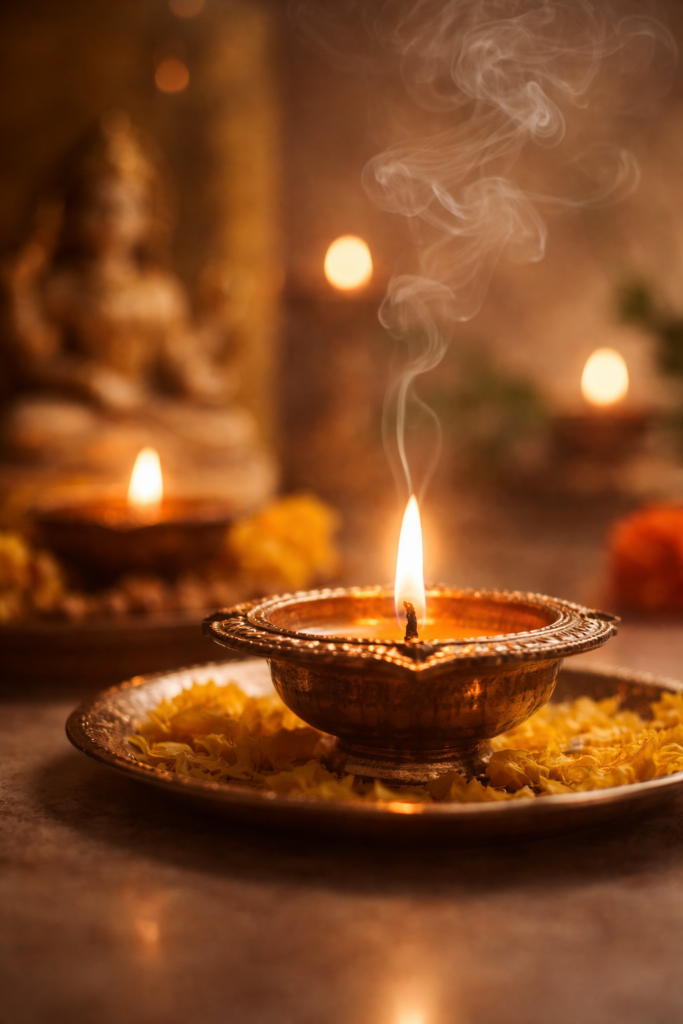
The lit oil lamp, or Deepa, is a universal symbol of hope and clarity.
- The Symbolism: Light represents divine knowledge that dispels the darkness of ignorance.
- The Connection: Lighting a lamp is an act of spiritual awakening. It is a reminder that wisdom is always available to lead us from confusion to clarity.
5. Naivedya (Food): The Joy of Surrender
The final offering is Naivedya, which consists of fruits, sweets, or traditional dishes.
- The Symbolism: It represents gratitude and the recognition of the divine as the ultimate provider.
- The Connection: By offering food, we practice selfless giving and release our attachment to material possessions. It is a beautiful way to embrace the divine will and share our abundance with others.
Why It Matters Today
In our fast-paced modern world, Panchopachara isn’t just an ancient tradition—it’s a tool for daily mindfulness. It transforms ordinary moments into sacred experiences, encouraging gratitude and inner transformation.
By understanding the “why” behind the “what,” your daily rituals become a powerful journey of the soul, connecting you to a timeless lineage of spiritual wisdom.
To Start Your Day with Divine Energy: A Beginner’s Guide to a 10-Minute Morning Puja a piece of content will help you to accomplish your daily ritual.
Bring the Sacred Home: Ready to Start Your Own Mindful Practice? Discover authentic pooja essentials and learn more about sacred traditions at VT Arpan.
Pingback: How to Do a 10-Minute Morning Puja at Home (Beginner Guide)